How to eat Counter Sushi | <em>Otsumami</em> (side dishes) and sushi which go great with sake!
Top eating tips everyone needs

If you can't read it now, bookmark it and check it out when you have time.

Business Dining Etiquette Guide: How to Enjoy Japanese & International Cuisine with Confidence

Business Dining Etiquette Guide: How to Enjoy Japanese & International Cuisine with Confidence

About 5 min read

You may find yourself entertaining clients at business dinners featuring dishes such as **sukiyaki**, **shabu-shabu**, or **counter-style sushi**. Many people have also experienced a moment of tension when **dobin-mushi** is served during a kaiseki meal. Let’s take this opportunity to review the proper dining etiquette for dishes that are commonly chosen for business meals and formal occasions.

share:

Share on Twitter
Share on Facebook
Share on Line

Table of Contents

【Grand Prince Hotel New Takanawa “ Shimizu”】
Enjoy a Full “Kaiseki” Course from Appetizers to Dessert

“Kaiseki cuisine” is a traditional multi-course Japanese meal you can enjoy at top-tier Japanese restaurants. From the opening appetizer to the final dessert, this article thoroughly explains the basic flow, etiquette, and manners of kaiseki dining. A must-read if you plan to enjoy kaiseki cuisine at a business dinner or formal gathering.
Read the detailed dining guide here

Read Next
How to eat <em>kaiseki</em> cuisine | Order of dishes, methods, and etiquette explained in detail!

How to eat kaiseki cuisine | Order of dishes, methods, and etiquette explained in detail!

Kaiseki traditional course dining is a fundamental element of Japanese cuisine. It is served at venues including the finest hotels, and luxury restaurants known as ryotei. For this article, we will cover the basic order of kaiseki dishes, methods to enjoy each, etiquette, and more, all explained in detail for the benefit of our guests from overseas. We visited Shimizu Japanese Restaurant at Grand Prince Hotel Shin Takanawa to learn more about the smart way to enjoy kaiseki cuisine.

Restaurant website: https://www.princehotels.co.jp/shintakanawa/plan/shimizu/about_shimizu/

【Kioi Nadaman】
How to Enjoy “Dobin-mushi,” a Classic Autumn Dish Served in a Teapot

“Dobin-mushi” is a classic autumn dish featuring ingredients such as matsutake mushrooms and conger eel, served in a traditional Japanese teapot. When it appears at a formal dinner, many people may wonder: Should you open the lid first? When should you pour the broth? This article introduces the best way to enjoy dobin-mushi deliciously and with confidence.
Read the detailed dining guide here

Read Next
How to eat <em>Dobin mushi</em> | Appreciating the broth from a cup before trying the <em>matsutake</em> is the authentic method!

How to eat Dobin mushi | Appreciating the broth from a cup before trying the matsutake is the authentic method!

Dobin mushi is a steamed dish served in a traditional Japanese earthenware pot called dobin. This classic autumn dish features seasonal ingredients such as matsutake mushroom and hamo (pike conger). This is not a common household dish, and you may be uncertain how to enjoy dobin mushi if it is served at a special occasion. With this in mind, we’ve asked the experts at Kioi Nadaman, a restaurant in the Hotel New Otani Tokyo, for advice on how to correctly enjoy this sophisticated dish.

Restaurant website: https://www.nadaman.co.jp/

【Kappo Futaba】
What You Should Know Before Eating Nikko Yuba, a Local Specialty of Nikko

“Nikko Yuba” is a specialty of Nikko City in Tochigi Prefecture. This article introduces the history of Nikko yuba, how it differs from Kyoto-style yuba, and various dishes made using Nikko yuba. Knowing these points beforehand will help you enjoy Nikko yuba even more.
Read the detailed dining guide here

Read Next
How to eat Nikko Yuba | Explore the heritage and flavor of yuba, a renowned food of Tochigi Prefecture

How to eat Nikko Yuba | Explore the heritage and flavor of yuba, a renowned food of Tochigi Prefecture

Nikko City, in Tochigi Prefecture, has a long heritage of making the most of its natural environment to produce yuba, the skin that forms on the top of boiled soy milk during the tofu making process. To write the word yuba, the kanji characters for “hot water” and “leaf” are used in Kyoto, but in Tochigi Prefecture, the kanji for “hot water” and “wave” are preferred. What’s the reason behind this nuance? And how is yuba prepared into cuisine? We visited a local kappo-style restaurant to learn about the fascinating story of yuba.

Restaurant website: http://www.nikkofutaba.com/

【Sushi Kurami】
The Proper Etiquette for Counter-Style Sushi, a Classic Business Dining Choice

Counter-style sushi is a popular choice for business entertainment and formal dinners. What should you order first? How should you eat it? What should you wear? What are the etiquette no-nos? We asked Akihiko Kobayashi, owner-chef of Sushi Kurami in Kachidoki, Tokyo, to explain the proper manners for enjoying counter sushi.
Read the detailed dining guide here

Read Next
How to eat Counter Sushi | <em>Otsumami</em> (side dishes) and sushi which go great with sake!

How to eat Counter Sushi | Otsumami (side dishes) and sushi which go great with sake!

Coming to Japan and going to a fancy sushi restaurant with a counter can be a nerve-wracking experience. What should you order first as you face the chef at the counter? How should you eat it? There are so many things you may not know. In this installment, we asked a sushi restaurant in Kachidoki, Tokyo, about the world of counter sushi!

【Teuchi Soba Takenouchi】
How to Enjoy “Sobamae,” the Culture of Drinking Sake at a Soba Restaurant

“Sobamae” refers to the custom of enjoying sake with classic side dishes at a soba restaurant before eating noodles. There are certain manners and recommended ordering sequences to know in advance. This article explores the culture and enjoyment of sobamae through on-site coverage.
Read the detailed dining guide here

Read Next
The <em>“Sobamae”</em> method of enjoying <em>soba</em> noodles | From <em>yakimiso</em> to <em>dashimaki</em> and on to <em>tempura</em>!

The “Sobamae” method of enjoying soba noodles | From yakimiso to dashimaki and on to tempura!

Picture a traditional soba (buckwheat noodle) restaurant, with a selection of small dishes laid out before you and a cup of cold sake on the side… not only delicious, but stylish as well! This culture of enjoying soba together with sake is known as “sobamae”. If you’ve eaten at sobaya (soba specialty restaurants) but only ever tried the noodles, this article is for you! We’ve asked a soba specialty restaurant for some advice on the smart way to enjoy soba and more in the “sobamae” style. Please read on to open new doors for your enjoyment of this traditional Japanese dish.

Restaurant website: https://shibuya.tokyu-plaza.com/shop/detail.html?_id=20049

Canni Sienne Ginza
Discover the Many Ways to Enjoy “Kegani” (Hairy Crab)

“Kegani” (hairy crab) is a classic winter dish often served at formal dinners. From enjoying it simply with soy sauce and sudachi citrus, to boiled, steamed, or grilled preparations, there are countless ways to savor this delicacy. We visited Canni Sienne Ginza in Tokyo to explore the variety of dishes available.
Read the detailed dining guide here

Read Next
How to Eat Hairy Crab in Japan – Complete Cooking Styles Guide

How to Eat Hairy Crab in Japan – Complete Cooking Styles Guide

Crab is a classic dish often served at winter banquets in Japan. Among all varieties, hairy crab (kegani) is considered by many to be "the most delicious of all crabs." It can be enjoyed in a variety of ways, such as sashimi-style (arai) or simply boiled. However, its reputation as a luxury ingredient may make some people hesitant to try it. To find out what a full-course hairy crab meal is really like, we visited Canni Sienne Ginza, a renowned crab specialty restaurant in Tokyo.

Restaurant website: https://www.instagram.com/kani.ginza/

【Bijindori】
Enjoy Every Part of Chicken Cuisine with a “Mizutaki” Hot Pot Course

“Mizutaki” is a traditional hot pot dish from Hakata, Fukuoka, featuring chicken and vegetables simmered to highlight their natural umami. For formal dining, ordering a course is the best way to fully enjoy mizutaki. This article introduces the course structure and how to eat it properly.
Read the detailed dining guide here

Read Next
Authentic Mizutaki Hotpot Course Experience at Bijindori— From Appetizers to Shime

Authentic Mizutaki Hotpot Course Experience at Bijindori— From Appetizers to Shime

*Mizutaki nabe* is a traditional Japanese hotpot dish in which chicken and vegetables are simmered together, allowing the natural flavors and umami of the ingredients to shine. It is considered a local specialty of the Hakata region in Fukuoka Prefecture. The *mizutaki* served at **Bijindori** features a rich, milky-white broth made simply by slowly simmering chicken bones and water. Despite its simplicity, the flavor is deep and full-bodied. In this article, we’ll guide you through how to enjoy the full course—from the appetizer to the final *shime* (finishing dish).

Restaurant website: https://bijindori.com/

【Tempura Shinjuku Tsunahachi Main Branch】
The Etiquette of Counter-Style Tempura for Enjoying True Freshness

Counter-style tempura, where the chef fries each piece right in front of you, is one of the great pleasures of formal dining. Before visiting, check out this guide on proper manners and tips to enjoy counter tempura at its best.
Read the detailed dining guide here

Read Next
How to eat tempura | Sit at the counter to savor the ultimate in freshly-fried flavor and texture!

How to eat tempura | Sit at the counter to savor the ultimate in freshly-fried flavor and texture!

In Japan, there exists a style of tempura specialty restaurant where customers are seated at the counter. The format of frying “right before your eyes” is the true heart and soul of tempura. To enjoy this style of tempura at its very best, we’ve visited “Tsunahachi Sohonten”, a time-honored tempura specialty restaurant where guests enjoy freshly-fried tempura at the counter.

Restaurant website: https://www.tunahachi.co.jp/

【Ushigoro Kan】
How to Enjoy Premium Yakiniku with A5 Wagyu and Sake Pairings

Yakiniku is a popular choice for business dining, especially premium courses featuring top-quality meat. This article introduces Ushigoro Kan’s luxurious “Kiwami” course, featuring A5-grade Japanese Black Wagyu, paired with sake for an indulgent experience.
Read the detailed dining guide here

Read Next
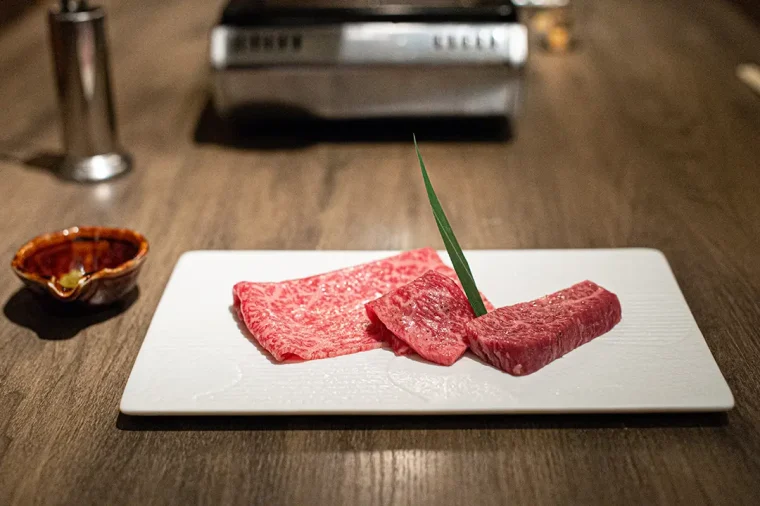
How to eat Wagyu beef yakiniku | Pair the choicest cuts of domestic A5 black wagyu with sake!

How to eat Wagyu beef yakiniku | Pair the choicest cuts of domestic A5 black wagyu with sake!

As one of the most sought after culinary experiences in Japan, the yakiniku style of barbecue hardly needs any introduction! High-end yakiniku, which includes world-renowned brands of premium wagyu beef, is a true meat lover’s dream. In this article, we visit Ushigoro Kan to savor a course of yakiniku featuring grade A5 domestic black wagyu paired with nihonshu (sake) – the pinnacle of luxury.

Restaurant website: http://ushigoro-kan.com/

【Ningyocho Imahan】
Savor Meltingly Tender Beef and Seasonal Vegetables with “Sukiyaki”

“Sukiyaki” is one of Japan’s quintessential celebratory dishes and is often chosen for formal dinners. When dining out, you may wonder: Should you cook the beef first or the vegetables? This article explains the proper way to enjoy sukiyaki.
Read the detailed dining guide here

Read Next
How to eat <em>sukiyaki</em> | Savor the beef on its own, then move on to the vegetables!

How to eat sukiyaki | Savor the beef on its own, then move on to the vegetables!

Sukiyaki, thin slices of tender beef simmered in a savory-and-sweet sauce with accompaniments such as vegetables and tofu, is one of the best-known Japanese dishes around the world! To a Japanese person, sukiyaki is a truly luxurious treat for special occasions. As this dish is most commonly enjoyed at home, being invited to have sukiyaki at a restaurant can be a somewhat stressful situation. Not to worry – we’ve asked the experts at a sukiyaki specialty restaurant, Ningyocho Imahan, for some tips on the smart way to prepare and enjoy sukiyaki in a restaurant setting!

Restaurant website: https://www.imahan.com/

KISOJI Shabu-Shabu & Japanese Cuisine】
How to Fully Enjoy Shabu-Shabu from Start to Finish

Although shabu-shabu has long been loved in Japan, many people are unsure of the proper steps and etiquette when visiting a specialty restaurant. We asked KISOJI about the correct way to enjoy shabu-shabu at their restaurants.
Read the detailed dining guide here

Read Next
How to eat <em>shabu-shabu</em> | Keeping the broth clear is essential!

How to eat shabu-shabu | Keeping the broth clear is essential!

Shabu-shabu is a long-beloved dish throughout Japan. Following the Second World War, beef dishes were introduced to Japan from Europe and America, which led to the shabu-shabu style of enjoying beef becoming popular throughout the nation. In this style, thinly-sliced pieces of beef are briefly swished through a simmering dashi broth, and enjoyed with a variety of condiments. We’ve asked a shabu-shabu specialty restaurant for some advice on the smart way to enjoy this classic dish.

Restaurant website: https://www.kisoji.co.jp/kisoji/

【Torafugu-tei】
Learn the Classic Course Flow for Enjoying Premium Fugu Cuisine

Fugu (pufferfish) has long been considered a luxury dish reserved for special occasions and formal dinners. From sashimi (tessa) to hot pot (tecchiri) and finishing with rice porridge, fugu cuisine follows a traditional sequence. We visited Torafugu-tei to learn the best way to enjoy it.
Read the detailed dining guide here

Read Next
How to eat <em>fugu</em> (pufferfish) cuisine | Savor a full course from <em>Tessa</em> (<em>fugu</em> sashimi) to <em>tecchiri</em> (<em>fugu</em> hotpot)

How to eat fugu (pufferfish) cuisine | Savor a full course from Tessa (fugu sashimi) to tecchiri (fugu hotpot)

Fugu (pufferfish) is a luxurious ingredient enjoyed in Japan for special occasions. There is an established order of dishes for fugu cuisine, as well as specific techniques to enjoy this remarkable delicacy. To learn the smart way to eat fugu cuisine, we visited Torafugu-tei, a restaurant renowned for its masterful dishes using domestic torafugu (tiger pufferfish) sourced directly from the point of production.

Restaurant website: https://www.torafugu.co.jp/

【French Restaurant】
Before You Go: The Flow and Etiquette of a Full French Course

If you are invited to a formal dinner featuring a full French course, it can feel intimidating. Before any worries set in, learn the basic flow and etiquette of French course dining to enjoy the experience at a higher level.
Read the detailed dining guide here

Read Next
How to Enjoy a Full-Course French Meal: A Step-by-Step Guide to Fine Dining Etiquette

How to Enjoy a Full-Course French Meal: A Step-by-Step Guide to Fine Dining Etiquette

Being invited to a full-course meal at a top-tier French restaurant can make anyone a little nervous, right? After all, a course meal is the very essence of French fine dining. From aperitifs to after-dinner coffee, the experience unfolds over two to three elegant hours. By understanding the basic flow, you can elevate your dining etiquette and enjoy the experience with confidence and grace.

【Trattoria Dal Birbante Giocondo】
Dining Etiquette for Enjoying Italian Cuisine à la Carte

Trattorias, the Italian equivalent of casual eateries, are usually enjoyed à la carte. With guidance from gourmet blogger Kyah, this article introduces how to enjoy a trattoria and what to know before an Italian business dinner.

【Italian Ristorante】
How to Fully Enjoy a Course at a Top-Tier Ristorante

Italian cuisine includes both trattorias for à la carte dining and high-end ristorantes offering full courses. Learn the overall structure of a course meal and wine pairings to elevate your Italian dining experience.
Read the detailed dining guide here

Read Next
A Complete Guide to Italian Full Course Dining: From Amuse to Digestif

A Complete Guide to Italian Full Course Dining: From Amuse to Digestif

Italian cuisine may have a casual image, but in Japan, there are many restaurants where you can enjoy an authentic full-course Italian meal. Top-tier establishments that offer course menus are often called ristorante. By understanding the structure of the course and the pairing of wines with dishes, you can elevate your dining experience and fully savor refined Italian cuisine.

【Chinese Cuisine Fang 8】
Enjoy Every Part of Peking Duck, from Skin to Meat

Peking duck is one of China’s most iconic dishes and may appear at Chinese business dinners. Many people are unsure how to eat it properly. This article explains the basic way to enjoy Peking duck, from ordering to the final dish.

Restaurant website: http://www.cceight.com/

*The information is based on the time of reporting or creation, and may differ from the current situation.

text: goodiefoodie編集部

photo: goodiefoodie編集部

tags:

share:

Share on Twitter
Share on Facebook
Share on Line
Home What To Eat Business Dining Etiquette Guide: How to Enjoy Japanese & International Cuisine with Confidence